
Projects - NonBugs Factory
Almaviva Winery
How we built an ecommerce platform for one of Latin America's most iconic wines, connected to the ERP and invoicing system the winery already used.
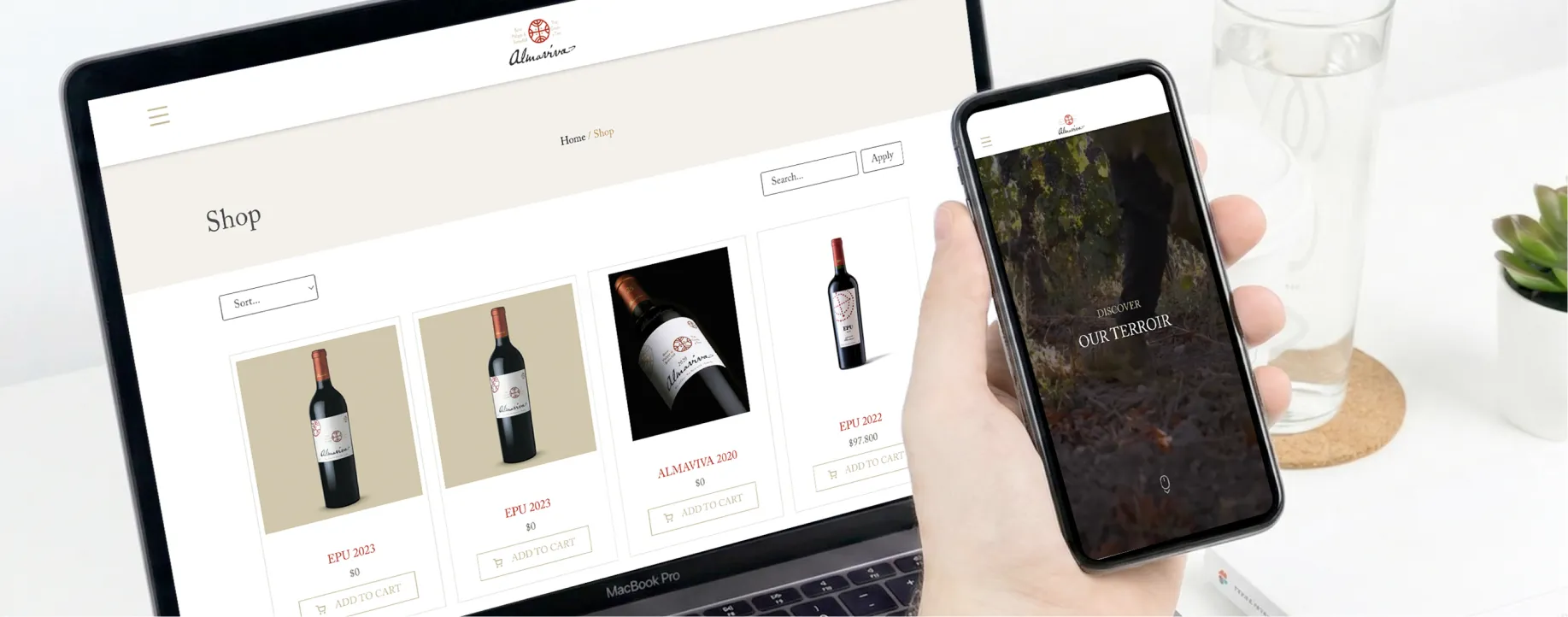
CLIENT
Almaviva — Joint venture between Viña Concha y Toro (Chile) and Baron Philippe de Rothschild (France).
INDUSTRY
Wine & Spirits · Ultra-premium · DTC + international retail.
SERVICES
Headless ecommerce · Tax integration · Catalog automation.
STACK
WordPress · WooCommerce · iFacture (Informat ERP) · Canto DAM · AWS.
THE CLIENT
A wine that travels the world
Almaviva is a Maipo Alto blend produced in Puente Alto, Chile. It was born in 1996 as an unusual joint venture: Viña Concha y Toro, Chile’s largest producer, and Baron Philippe de Rothschild, owners of Château Mouton Rothschild in Pauillac. The result is a label exported to dozens of countries and a fixed name in the ultra-premium segment of Latin American wine.
At this scale, ecommerce isn’t just a channel: it’s an international showcase. Every technical decision has to respect the brand image, integrate with existing operations, and comply with Chilean tax authorities. The margin for error is low, and product visibility, high.
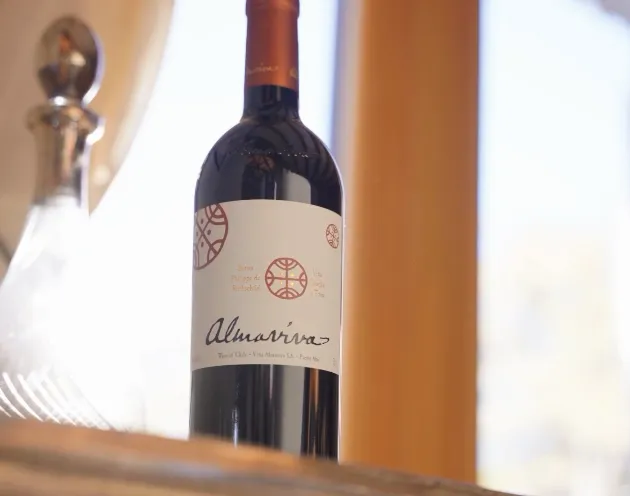
Maipo Alto · Chile · 1996
Almaviva
_THE STARTING POINT
Robust operations, no integrated digital channel
Almaviva already had a digital presence built on WordPress and operated its backoffice with Informat ERP — the system it uses to manage pricing, stock, and catalog — together with iFacture, the electronic invoicing module of the same ecosystem, certified by the Chilean SII.
The client needed to add an ecommerce platform that met three conditions at once: preserve the visual and editorial identity already built in WordPress, synchronize pricing and stock with the ERP without manual double entry, and issue valid electronic tax documents on every sale without human intervention.
The team reported recurring stock discrepancies between channels and hours dedicated to manually updating pricing and catalog. When a product’s price changed, the update traveled by email and was replicated channel by channel. When stock moved in the warehouse, the site could show availability that no longer existed.
” Permanent rework. Tasks that added no value but couldn’t be skipped.
_THE TECHNICAL DECISION
Why we didn't go with Shopify
The initial intuition for any premium ecommerce project is Shopify Plus. Clean templates, robust catalog, infrastructure maintained by a third party. We ruled it out for two technical reasons and one of opportunity.
Technical reason 1
Shopify had no native integration with iFacture / Informat ERP. Building the bridge would have required external middleware, additional hosting, and one more point of failure in the chain. Each DTE would have had to travel outside Shopify, be processed, and come back — with the latency and operational risk that implies in a channel where every purchase issues an electronic invoice.
Technical reason 2
The client’s pricing rules are complex: variations by region, by channel, and by B2B customer with assigned lists. Reproducing that logic inside Shopify’s discount model meant forcing the existing rules to fit a container — instead of respecting the source of truth that was already operating well behind the scenes.
Opportunity
Almaviva already had its site on WordPress, with a carefully crafted visual system. WooCommerce allowed us to add transactional capacity on top of the same infrastructure — without content migration, new hosting, or retraining the client’s team on a different environment.
The final decision: WooCommerce as the visible layer, Informat ERP as the operational source of truth, custom plugin as the bridge.
ARCHITECTURE
How everything connects
A single source of truth feeds the digital channel through a plugin we built. What moves in the warehouse is reflected on the site. What sells on the site invoices itself.
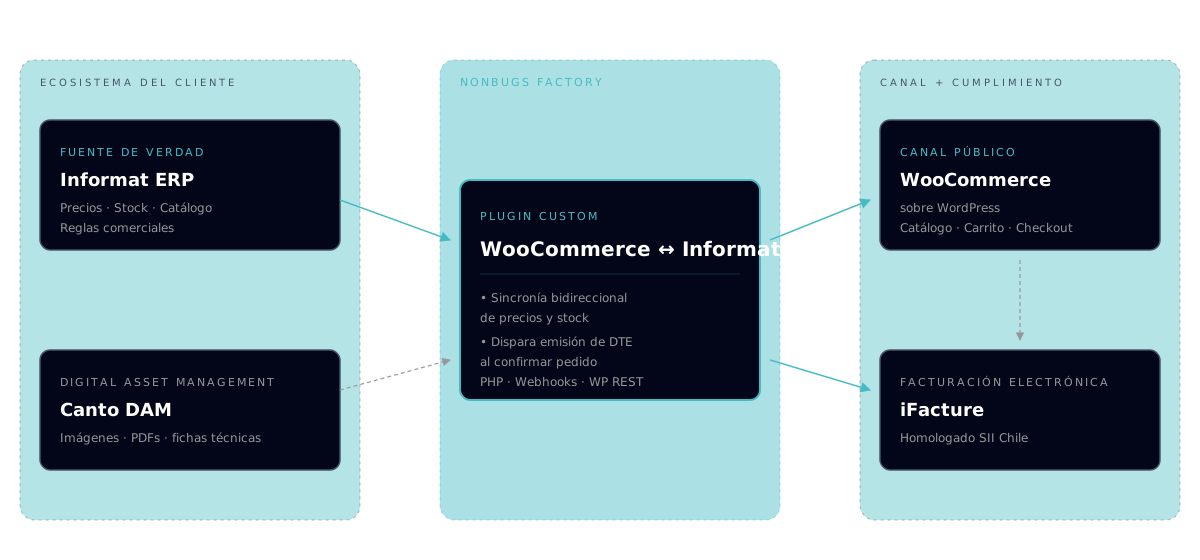
Fig. 01 · ERP → WooCommerce → SII sync
Informat ERP is the single source of pricing, stock, and catalog. The custom plugin we developed synchronizes that information with WooCommerce in real time and triggers the emission of the electronic tax document via iFacture when a sale is confirmed. The Almaviva team doesn’t handle files, doesn’t enter data twice, doesn’t process invoices manually.
_THE SOLUTION
A custom plugin, not a patch
The technical core of the project was the development of a custom WooCommerce plugin that connects to iFacture (the electronic invoicing layer of the Informat ecosystem) and keeps pricing, stock, and tax document emission synchronized.
Every paid order automatically triggers the emission of the DTE certified by the Chilean SII. The customer receives their invoice by email without anyone on the Almaviva team intervening. Stock updates at the moment of transaction, not in an overnight batch.
We integrated Canto as a DAM to populate product cards with images, PDFs, and technical specs from the source the marketing team was already using. And we developed a master pricing module that centralizes the rules and propagates them to the public site and the client’s other sales channels.
THE PRODUCT
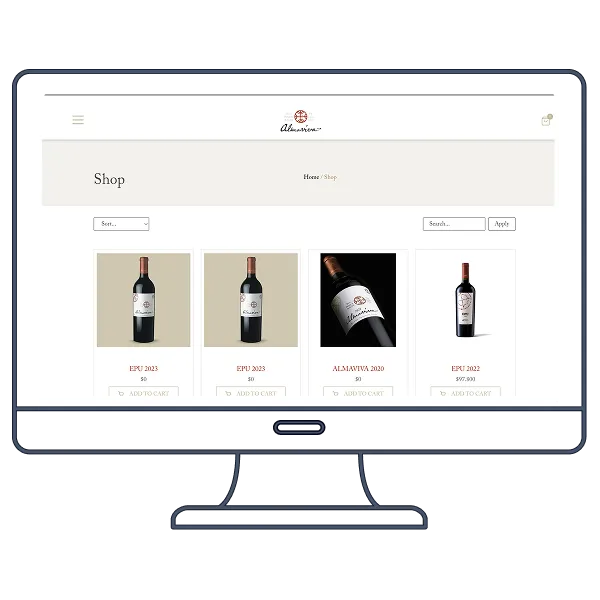
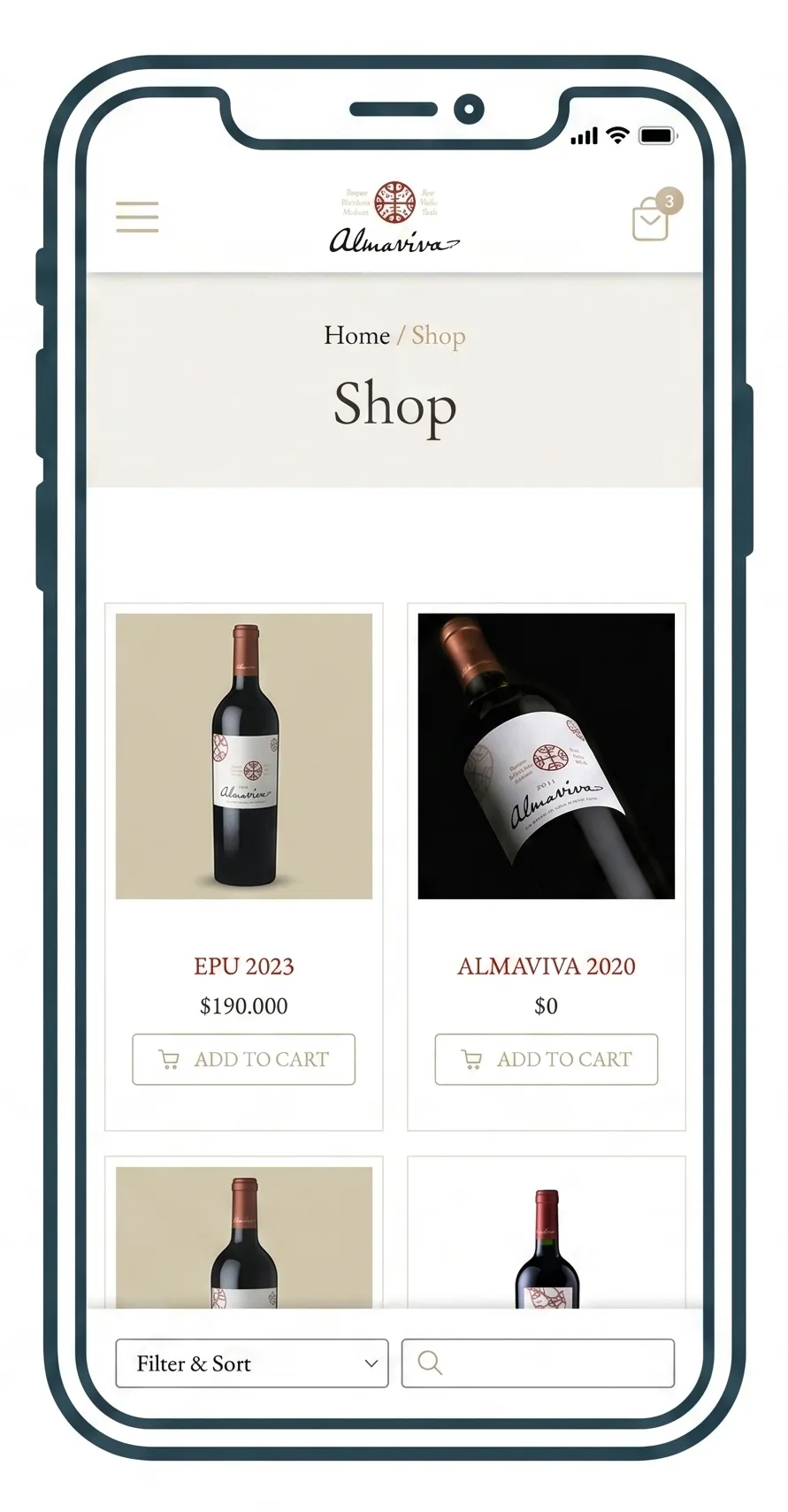
The shop in action
_RESULTS
What changed once everything was connected
_HEADLINE RESULT
Double data entry eliminated
The team stopped maintaining the catalog in parallel between the ERP and digital channels. The source of truth is one; channels reflect it automatically.
Hands-off electronic invoicing
Every sale issues its valid DTE filed with the Chilean SII automatically. The customer receives the invoice by email; the Almaviva team no longer processes documents one by one.
Real-time stock synchronization
Availability shown on the site reflects the real state in the warehouse, reducing the risk of orders on non-existent stock.
Single-source catalog
Images, PDFs, and technical specs live in Canto. The site consumes them; there are no manual copies.
Centralized pricing rules
Price changes by region, channel, or B2B customer are applied once and propagated to every point of sale where Almaviva operates.
_WHAT WE LEARNED
Three ideas we took from this project
No premium brand without serious integration
The ultra-premium wine market is measured in details: the label, the case, the temperature, traceability. That same demand has to exist in the digital channel. An integration that fails on a Friday night in a market that ships hundreds of dollars per bottle isn’t a minor bug: it’s a brand failure. Designing for that standard changes how the stack is decided.
When the client already has a good foundation, don’t replace it
Almaviva had a careful WordPress site and an ERP that worked. The option to migrate everything to a modern SaaS platform would have been more sellable for us — more hours, more complexity, more billing. But worse for the client. The right decision was to integrate, not replace.
Transparency in complex projects beats one-off speed
When an ecommerce platform connects to an ERP, an invoicer, a DAM, and multiple sales channels, there are moments where something doesn’t depend on one party alone. That’s where the client needs to see clearly what’s being done, what’s pending, and what they can decide to unblock. Part of what we do at NonBugs is offer that visibility: technical advisory that accelerates shared processes, even when it doesn’t always involve writing code.
_STACK
Project technologies
Led by
Franco Gregorio
CTO — NonBugs Factory
Does your brand have
a complex operation behind the ecommerce?
We work with wineries, retailers, and premium brands that need their digital channels to respect what already works inside. We don’t replace systems; we connect them.
Schedule a meeting